The Write-Down #19
The great American actress Sally Field (Smokey and the Bandit, Norma Rae, Steel Magnolias, Forrest Gump, and so much more), in her recent speech accepting the Screen Actors Guild Lifetime Achievement Award, said “When I got off stage, I felt shy and careful and hidden. I would think and rethink everything before I could say or do anything. But on stage, I never knew what I would say or do. I would surprise myself. I wasn't looking for the applause or attention, even though that's nice, sometimes. It was never and it's never been about a need to hide myself behind the characters of other people. Acting to me has always been about finding those few precious moments when I feel totally, utterly, sometimes dangerously alive.”
When do you feel totally, utterly, dangerously alive?
Each week here at downboy, LLC, we like to take a moment to get to know a little more about our amazing team. One question. Three Answers. No judgment.
The great American actress Sally Field (Smokey and the Bandit, Norma Rae, Steel Magnolias, Forrest Gump, and so much more), in her recent speech accepting the Screen Actors Guild Lifetime Achievement Award, said “When I got off stage, I felt shy and careful and hidden. I would think and rethink everything before I could say or do anything. But on stage, I never knew what I would say or do. I would surprise myself. I wasn't looking for the applause or attention, even though that's nice, sometimes. It was never and it's never been about a need to hide myself behind the characters of other people. Acting to me has always been about finding those few precious moments when I feel totally, utterly, sometimes dangerously alive.”
When do you feel totally, utterly, dangerously alive?

“I’m thinking clear blue water, a snorkel and some crazy colorful fish. And a reef, maybe. Also colorful.. Sun shining through the blue…yeah, that’s when I'd feel most alive. Never done it, of course…because, sharks. And sun. Heat. Humidity. That water in the ear feeling. But yeah, snorkeling.”
Edward Daniels, Occupant, Cubicle 17
“In the club. On a night when the song’s right, the rhythm all through you, in you. Crowded, so no one is watching. Just dancing, lost in the chaos of bliss.”
Em, Metal Detection Technician
“When I’m quantum tunneling, feeling the neutrinos through my hair.”
Alex A, Technologist
The Write-Down #18
A day set aside to honor mothers exists in nearly all cultures and dates back thousands of years, but the modern incarnation dates back to 1887, when, according to The Old Farmer’s Almanac, Mary Towles Sasseen, a teacher from Henderson, Kentucky, led her class in the first known observance of mother’s day. She traveled the country and wrote a pamphlet to share her vision of a special day set aside to honor the matriarchy. Years later, The national day of recognition in the United States came to fruition through the work of Ann Reeves Jarvis, Julia Ward Howe, and Ann’s daughter Anna M Jarvis. We won’t get into the details here, but it did take a surprisingly long time for the idea to finally make it Congress. Finally, Woodrow Wilson signed a bill designating the second Sunday in May as a legal holiday dedicated “to the best mother in the world, your mother.”
What did you do to honor ‘the best mother in the world’ on her day?
Each week here at downboy, LLC, we like to take a moment to get to know a little more about our amazing team. One question. Three Answers. No judgment.
A day set aside to honor mothers exists in nearly all cultures and dates back thousands of years, but the modern incarnation dates back to 1887, when, according to The Old Farmer’s Almanac, Mary Towles Sasseen, a teacher from Henderson, Kentucky, led her class in the first known observance of Mother’s Day. She traveled the country and wrote a pamphlet to share her vision of a special day set aside to honor moms. Years later, The national day of recognition in the United States came to fruition through the work of Ann Reeves Jarvis, Julia Ward Howe, and Ann’s daughter Anna M Jarvis. We won’t get into the details here, but it did take a surprisingly long time for the idea to finally make it through congress and onto the president’s desk in 1914, when Woodrow Wilson signed a bill designating the second Sunday in May as a legal holiday dedicated “to the best mother in the world, your mother.”
What did you do to honor ‘the best mother in the world’ on her day?

“Brunch out was not great. Mom’s was so bad she was taking her leftovers home to feed the dog.”
E. W., Controller

“I made a phone call and gave the gift of not seeing her and transmitting my COVID.”
Cindy Nevermore, Collections
“As an ongoing non-participant in what is considered ‘appropriate’ behavior in situations like this…well, it wasn’t nothing.”
G. Smith, Consultant
The Write-Down #17
Neanderthals have been in the news a lot lately as new discoveries shed more light on who they were and what happened to them. And what happened to them is complicated, not least by the fact that they seem to still ‘exist’ occasionally in the DNA of modern Homo Sapiens. Essentially, they didn’t completely disappear, but in the race to become the dominant primate species on planet earth, they lost. Why? has been a question without a definitive answer for some time now. After all, they were quite physically capable, intelligent creatures with language capabilities, tool-making, and artistic ability. A new theory posits that their ultimate lack of success had to do with the fact that they were not nearly as good at building communal networks as humans. Often living in small, isolated bands, where knowledge crucial to species survival became locked up inside their larger individual skulls.
What, if anything, can we learn from this?
Each week here at downboy, LLC, we like to take a moment to get to know a little more about our amazing team. One question. Three Answers. No judgment.
Neanderthals have been in the news a lot lately as new discoveries shed more light on who they were and what happened to them. And what happened to them is complicated, not least by the fact that they seem to still ‘exist’ occasionally in the DNA of modern Homo Sapiens. Essentially, they didn’t completely disappear, but in the race to become the dominant primate species on planet earth, they lost. Why? has been a question without a definitive answer for some time now. After all, they were quite physically capable, intelligent creatures with language capabilities, tool-making, and artistic ability. A new theory posits that their ultimate lack of success had to do with the fact that they were not nearly as good at building communal networks as humans. Often living in small, isolated bands, where knowledge crucial to species survival became locked up inside their larger individual skulls.
What, if anything, can we learn from this?
“Speaking from experience, loneliness can take its toll.”
Charles, “Big Cheddar” Showalter
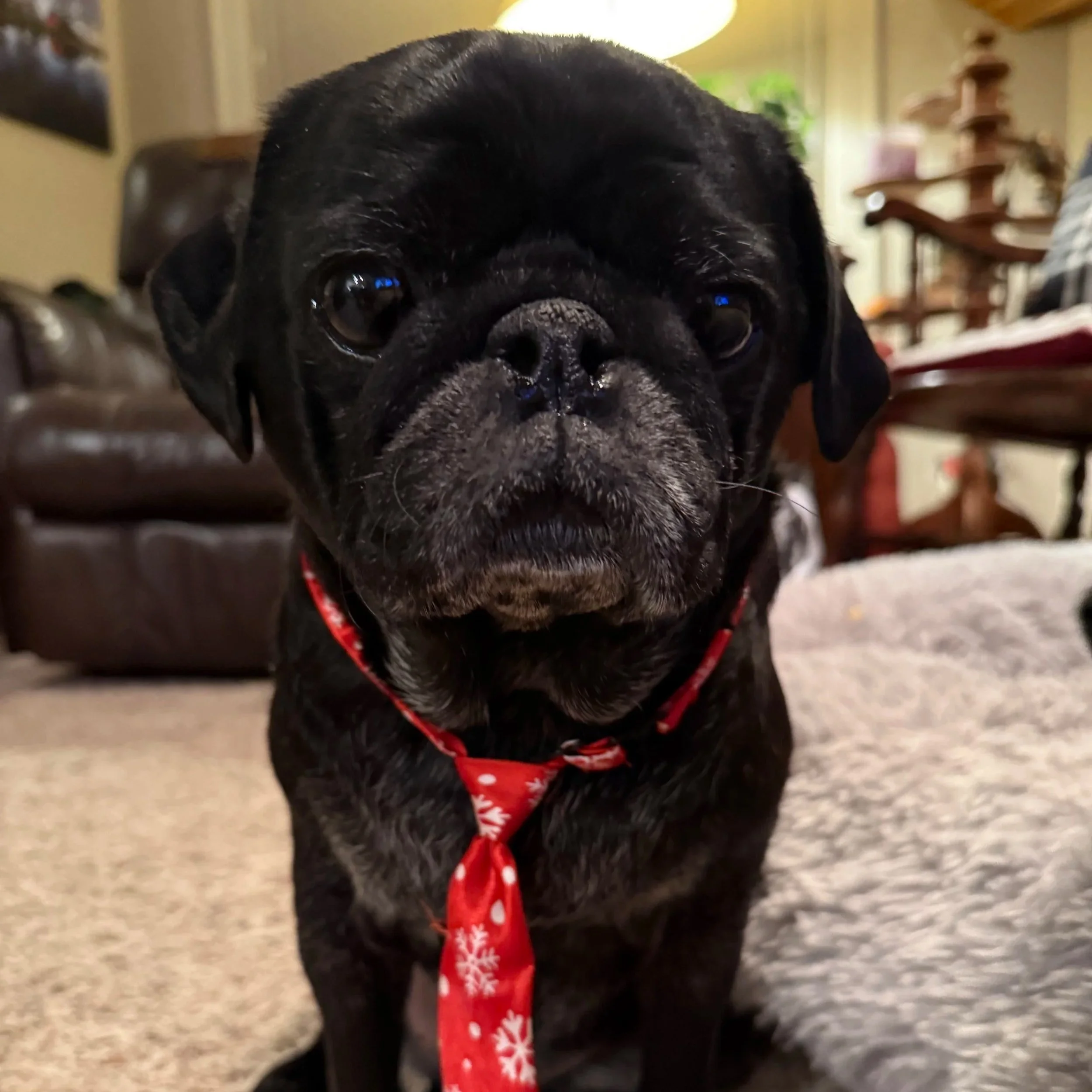
“After being told my own art looked like some Neanderthal made it, I looked into this. Turns out they had a sense for abstraction, not just making crude representations of animals to hunt. Also, I think they liked dogs, too.”
Wallace, Assistant Director, Sales
“Hmmm. Grok say what?”
Dan-O, Mono-instrumentalist
The Write-Down #16
Consider the Chiton. On a recent South Central Florida team-building beach retreat, we here at downboy, LLC began each day with a post-dawn shoreline walk, contemplating the wonder, thinking about Q2 projections, leaving our footprints oh so temporarily in the sand, and searching the white sand for that perfect memory shell. On the second morning, we came across a shiny reddish-brown lump about the size of a human heart. Wait, we thought, is that…What is the that?
Each week here at downboy, LLC, we like to take a moment to get to know a little more about our amazing team. One question. Three Answers. No judgment.
Consider the Chiton. On a recent South Central Florida team-building beach retreat, we here at downboy, LLC began each day with a post-dawn shoreline walk, contemplating the wonder, thinking about Q2 projections, leaving our footprints oh so temporarily…searching the white sand for that perfect memory shell. On the second morning, we came across a shiny reddish-brown lump about the size of a human heart. Wait, we thought, is that…What is that? We crouched down to get a closer look in the foamy surf as it drifted a bit with each wave. What the hell is that? Cautious, we gently poked it with a shell fragment. (Probably) not a heart. Wielding a sophisticated mollusk identifying tool, we were told it was a Gumboot Chiton. Known among mollusk enthusiasts as the ‘wandering meatloaf,’ it is essentially eight shell plates over a large foot covered in a leathery reddish brown ‘girdle’. In open water, in can turn itself into a sort of ball. Fascinating, yes, and content with our ‘knowledge’, we later discovered this was not the end of the story. Lesson learned. Turns out it couldn’t have been the aforementioned chiton, which is generally only found in the cooler waters of the Pacific. Using the same identification tool, we realized that it was probably just a Spotted Sea Hare, quite commonly found in the shallow waters of the Gulf. Not exactly as cool as a wandering meatloaf, but a formidable creature nonetheless. To protect itself, it emits an ink like an octopus, which can induce ‘altered behavior’ in others creatures who disturb it. Not bad, sea hare, not bad.
Point is, we thought we’d open this week’s question up to a story. Describe an encounter with the previously unknown. A time when you came across some thing, some situation that prompted the age old question:
What (the hell) is/was that?
“So, at the place I used to work, we had two ultrasonic cleaners. About the size of a toaster. One, we used and cleaned often. The other was like a backup. One day, we went to use the backup and we discovered a small greenish growth on the stainless steel pan. We let it go. Over time, the growth grew into something…beautiful? In any case, it got to the point that no one could do anything about it. We checked in on it. Nurtured it, gave it a name: Larry. It (they?) eventually evolved into something a bit larger than a golf ball. When we moved to a new location, sadly, Larry and his ultrasonic cleaner world did not make the trip. But I think about him often. And what could have been…”
Em, Metal Detection Technician
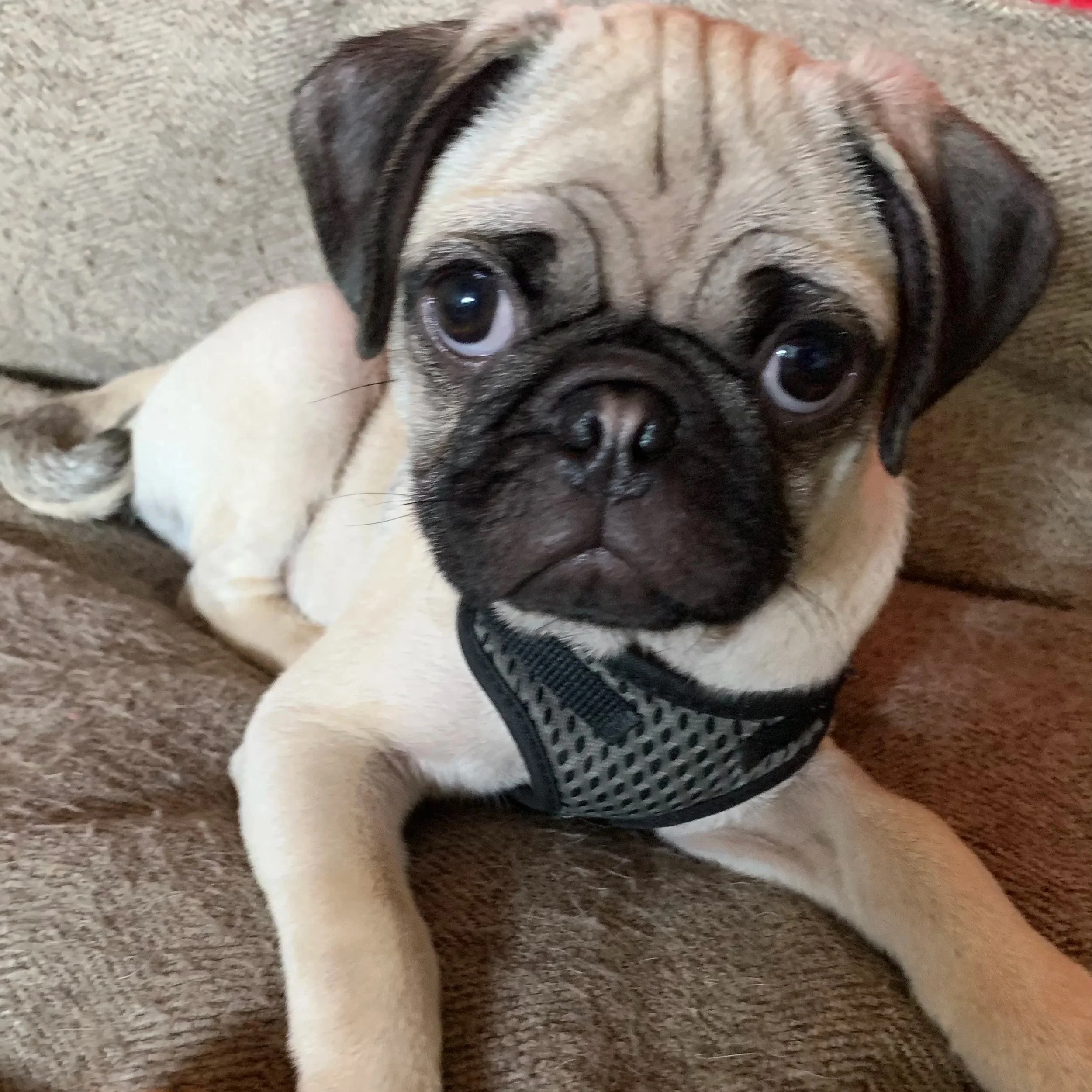
“Give me a walk, I’m going to find something. My advantage is that I don’t really have the language to articulate what the hell anything is. I hear things like “Phil, no!” “Drop it.” Something about “goose poop”, or “pebble”, “We don’t eat that!” And then one time…that’s the one I want to talk about. It was a pleasant, cool afternoon in the spring. A familiar path. Just waggling along like usual. And right there, in the middle of the grassy boulevard, a filet mignon-sized (yes, I am familiar) object glistened in the waning sun. When something like that happens, there’s no time for questions…When I look back on it, I don’t know what it was, but it became a part of me, and hey…I’m still here.”
Philip K, Accounting
“I saw a dead guy once on the railroad tracks.”
Dewey Crowe, 1099 Independent Contractor (Off-book)
The Write-Down #15
Rock, paper, scissors. A schoolyard game. A way to potentially get out of doing something. A psychological challenge unlike any other. According to the World Rock Paper Scissors Association (because of course…) the game dates to ancient China (frog, centipede, snake. Frog beats centipede, and so on). The game evolved over the centuries in other cultures, each with their own symbolic participants until it emerged into the global mainstream circa 1900 as the game we know today. The winner of the Rock Paper Scissors Throwdown, held recently in New Jersey, bested 383 fellow competitors to take the $10,000 prize. Many of those who left the contest early employed more ‘fixed’ strategies (i.e. “Everybody starts off with rock, so I…”, etc.), but the defining feature of the winner’s circle seemed to be less thought out. No strategy, just gut.
What is your Rock, Paper Scissors Strategy?
Each week here at downboy, LLC, we like to take a moment to get to know a little more about our amazing team. One question. Three Answers. No judgment.
Rock, paper, scissors. A schoolyard game. A way to potentially get out of doing something. A psychological challenge unlike any other. According to the World Rock Paper Scissors Association, the game dates to ancient China (frog, centipede, snake: Frog beats centipede, and so on). The game evolved over the centuries in other cultures—each with their own symbolic participants—until it emerged into the global mainstream circa 1900 as the game we know today. The winner of the Rock Paper Scissors Throwdown, held recently in New Jersey, bested 383 fellow competitors to take the $10,000 prize. Many of those who left the contest early employed more ‘fixed’ strategies (i.e. “Everybody starts off with rock, so I…”, etc.), but the defining feature of the winner’s circle seemed to be less thought out. No strategy, just gut.
What is your Rock, Paper Scissors Strategy?
“Strategy? Yeah, none. Completely Random. In the moment. Rock, Paper, Scissors. I mean, yeah. What else is there?”
E.W., Controller
“My strategy is: do I want to win or not? That is the question.”
Cindy Nevermore, Collections

“Paper every time. Even in a best of five.”
Haldy, Musician
The Write-Down #14
Fewer than 1% of all known animals use tools, which equates to dozens of species exist, and not just primates. Depending on the definition of tool use (and even tool-making), the number is much larger than expected. Chimpanzees, orangutans, gorillas, crows, octopuses, otters, dolphins, the list goes on. But a recent entry into the shed, Veronika—a 13 year-old Austrian pet cow—is utterly changing what we know about animal intelligence. Raised in a supportive environment (a key factor in farm animal tool use), She learned to manipulate a deck brush with precision, using different parts of the brush to scratch different parts of her body, from thick hide, to the more sensitive underbelly, applying appropriate amounts of pressure where needed.
Have you ever witnessed an animal use a tool? and/or What tool would you like to see an animal use?
Each week here at downboy, LLC, we like to take a moment to get to know a little more about our amazing team. One question. Three Answers. No judgment.
Fewer than 1% of all known animals use tools. Depending on the definition of tool use (and even tool-making), the number is much larger than expected. Chimpanzees, orangutans, gorillas, crows, octopuses, otters, dolphins, even insects…the list goes on. But a recent entry into the shed, Veronika—a 13 year-old Austrian pet cow—is utterly changing what we know about animal intelligence. Raised in a supportive environment (a key factor in farm animal tool use), She learned to manipulate a deck brush with precision, using different parts of the brush to scratch different parts of her body, from thick hide, to the more sensitive underbelly, applying appropriate amounts of pressure where needed.
Have you ever witnessed an animal use a tool? and/or What tool would you like to see an animal use?
“My dog’s a genius and I have proof, but photo submissions are apparently not allowed…so you’re gonna have to trust me.”
Alexandra A., Information Technologist

“I dream of putting a toy pottery wheel out for the occasional raccoon visitor to the patio. It would be nice to see him do something constructive for once.”
Megan Oeth, Human Resources
“I saw a squirrel once trying to smoke a cigarette butt with two hands. Rookie. Does that count?”
Dan-O, Mono-instrumentalist
The Write-Down #13
The Northern Lights. Aurora Borealis (or Australis, for all of our other-side-of-the-globe friends). An amazing atmospheric phenomenon. If you’ve never seen it, you’re going to be fine. But it is pretty cool. How it happens? That is not our quest today. Instead, let’s talk about STEVE. The Strong Thermal Emission Velocity Enhancement occurs…somehow. It’s different from, but adjacent to, the Borealis. For years, the University of Alberta has had cameras trained north, where the Northern Lights paint the sky, yet they were missing something. It wasn’t until a ragtag group of citizen scientist night owls (The Alberta Aurora Chasers)—armed the with the high quality photography of cell phones—began to document this other atmospheric wonder, that STEVE became a thing. So much so that NASA got involved. The result represents an amazing discovery built from the ground up.
What can we learn from this beautiful story?
Each week here at downboy, LLC, we like to take a moment to get to know a little more about our amazing team. One question. Three Answers. No judgment.
The Northern Lights. Aurora Borealis (or Australis, for all of our other-side-of-the-globe friends). An amazing atmospheric phenomenon. If you’ve never seen it, you’re going to be fine. But it is pretty cool. How it happens? That is not our quest today. Instead, let’s talk about STEVE. The Strong Thermal Emission Velocity Enhancement occurs…somehow. It’s different from, but adjacent to, the Borealis. For years, the University of Alberta has had cameras trained north, where the Northern Lights paint the sky, yet they were missing something. It wasn’t until a ragtag group of citizen scientist night owls (The Alberta Aurora Chasers)—armed the with the high quality photography of cell phones—began to document this other atmospheric wonder, that STEVE became a thing. So much so that NASA got involved. The result represents an amazing discovery built from the ground up.
What can we learn from this beautiful story?

“I want to go there.”
McKenna Shoberg, Retinal Photographer

“Oh great! Another talented and dedicated group of people not getting the credit they deserve for the essential work of discovery they do out of love. Or insomnia. Sounds fun.”
Ed Walters, Occupant, Cubicle 17
“I’ll get these alerts on my phone about the Northern Lights visible tonight in these 10 states, so I go out walking around looking up at the sky. Nothing. Light pollution is a real problem, and it’s on my list. Pretty far down, but it’s there.”
Megan Oeth, Human Resources
The Write-Down #12
Lightning Strikes. Three million times a day, globally. 90% of people, when struck, don’t die yet 20-40 are killed annually in the United States, 80% male. Fascinating, yes, but here’s the thing: one of the most elusive mysteries of atmospheric science is, essentially, why all this lightning? It turns out that air is a great insulator that doesn’t readily conduct electricity. So, theoretically, the size of the electrical field (known in the biz as the ‘breakdown threshold’) needed to produce even one lightning strike is much larger than what actually exists in even the most virulent thunderstorm or upper atmospheric disturbance.
It affects all of us. So…any good lightning stories?
Each week here at downboy, LLC, we like to take a moment to get to know a little more about our amazing team. One question. Three Answers. No judgment.
Lightning Strikes. Three million times a day, globally. 90% of people, when struck, don’t die yet 20-40 are killed annually in the United States, 80% male. Fascinating, yes, but here’s the thing: one of the most elusive mysteries of atmospheric science is, essentially, why all this lightning? It turns out that air is a great insulator that doesn’t readily conduct electricity. So, theoretically, the size of the electrical field (known in the biz as the ‘breakdown threshold’) needed to produce even one lightning strike is much larger than what actually exists in even the most virulent thunderstorm or upper atmospheric disturbance.
It affects all of us. So…any good lightning stories?
“You mean like ‘in a bottle?’ Yeah, I’ve seen it.”
Dan-O, Mono-instrumentalist
“There was this time…I remember it well. We started the hike in sunshine, but somewhere along the way the to the top of the trail, the clouds rolled in. I could hear it coming for miles of course, but no one in the group got it. We ended up huddling together in a lean-two one-hole, listening to branches crackle around us. Let’s just say: it was formative. Made me want to run my own company. And here we are.”
Wilco, C.E.O.

“Changed my life.”
C-Mac, Arizonan
The Write-Down #11
The universe is unfathomably complex, and try as we might to understand the nature of this existence we inhabit, meaning is elusive. For centuries, human beings have comforted themselves with a belief that “when the time is right, everything will become clear” (or some version of this idea, often involving a divine being, or the revelations accorded to us when we leave this mortal coil.)
Does this seem plausible? Why or why not?
Each week here at downboy, LLC, we like to take a moment to get to know a little more about our amazing team. One question. Three Answers. No judgment.
The universe is unfathomably complex, and try as we might to understand the nature of this existence we inhabit, meaning is elusive. For centuries, human beings have comforted themselves with a belief that “when the time is right, everything will become clear” (or some version of this idea, often involving a divine being, or the revelations accorded to us when we leave this mortal coil.)
Does this seem plausible? Why or why not?
“I’ve said it before and I’ll say it again: Fuck if I know.”
G Smith, Consultant
“We die everyday, and I don’t know shit.”
Haldy, musician, songwriter
“There are more things in heaven and earth than are dreamt of in your philosophy.”
Charles “Big Cheddar” Showalter, Nightwatchman
The Write-Down #10
One of the great mysteries of cognitive archaeology is why Homo Sapiens developed a self-reflective awareness capable of abstract thought and the ability to (re)imagine past and future events and communicate those things with complex language. There is a wide range of opinions on how this happened. One of the theories put forth, articulated in the book The Singing Neanderthals, is that language grew out of music, and that our ancestor’s communication style was more like birdsong. Elaborate, perhaps, but not ruminative, meditative, or capable of abstraction. Until it was.
Why do you think our ancestors developed the ability to think symbolically about the nature of existence?
Each week here at downboy, LLC, we like to take a moment to get to know a little more about our amazing team. One question. Three Answers. No judgment.
One of the great mysteries of cognitive archaeology is why Homo Sapiens developed a self-reflective awareness capable of abstract thought and the ability to (re)imagine past and future events and communicate those things with complex language. There is a wide range of opinions on how this happened. One of the theories put forth, articulated in the book The Singing Neanderthals, is that language grew out of music, and that our ancestor’s communication style was more like birdsong. Elaborate, perhaps, but not ruminative, meditative, or capable of abstraction. Until it was.
Why do you think our ancestors developed the ability to think symbolically about the nature of existence?
“All I know is this: I develop object permanence before a human baby and I've never worked a day in my life. What’s so great about symbolic communication?”
Philip K, Accounting
“Music seems right. Or mushrooms, maybe. That also makes sense. ’
Dan-O, Mono-instrumentalist

“Well, from a evolutionary adaptation/selection perspective it would have to mean that this self awareness must have somehow been beneficial. I don’t really see it.”
Haldy, Co-Founder, downboy, LLC
The Write-Down #9
99.99 % of Earth’s atmosphere is composed of four gases. Of these four, nitrogen accounts for 78%.
What’s up with all the nitrogen?
Each week here at downboy, LLC, we like to take a moment to get to know a little more about our amazing team. One question. Three Answers. No judgment.
99.99 % of Earth’s atmosphere is composed of four gases. Of these four, nitrogen accounts for 78%.
What’s up with all the nitrogen?

“I don’t want to take up all the oxygen in the room when I get asked this question, but I only have eyes for carbon dioxide.”
Rebecca, Office Plant
“I’ve always admired Nitrogen for precisely this reason: its abundance and raison d’être results directly from its reluctance to interact. But in a good way.”
Ed Walters, Occupant, Cubicle 17:

“Nitrogen, Nitrogen, Nitrogen. You know what you don’t hear enough about? Argon. The welders out there know what I’m talking about.”
Dennis Messner, Product Manager
The Write-Down #8
The practice of handing out awards for achievement probably dates back to pre-agricultural societies, when a hunter responsible for a kill was rewarded with a bauble of some kind for making a kill that pleased the community. Modern society is awash in awards for excellence in intellectual, artistic, and athletic achievement.
With the prevalence of granting awards for just showing up (i.e. participation) reaching its apex sometime in first quarter of the 21st century, do you foresee a time when we will dispense with this practice?
Each week here at downboy, LLC, we like to take a moment to get to know a little more about our amazing team. One question. Three Answers. No judgment.
The practice of handing out awards for achievement probably dates back to pre-agricultural societies, when a hunter responsible for a kill was rewarded with a bauble of some kind for making a kill that pleased the community. Modern society is awash in awards for excellence in intellectual, artistic, and athletic achievement.
With the prevalence of granting awards for just showing up (i.e. participation) reaching its apex sometime in first quarter of the 21st century, do you foresee a time when we will dispense with this practice?
“I’ve got a mug that says Coolest Dog Ever, and `I must admit, sometimes when I am feeling unsure of my place, it cheers me up. But like they always say at the Academy Awards, there really is no best. Also, I have a mug.”
Wallace, Assistant Director, Sales and Merchandising
“My cubby is plastered with laminated copies of Certificates of Whatever that I've received over the years for pretending to be present for some training or workshop. When I’m feeling extra cynical, I’ll buy a cheap frame with every intention of putting something in it, only to find it years later collecting dust in a banker’s box of ‘work stuff’.”
Ed Walters, Occupant, Cubicle 17
“Excellence is its own reward…wait, did I say Excellence. I meant money.”
Megan Oeth, Human Resources
The Write-Down #7
This year’s Winter Olympics were held in Milan, near the famed opera house Teatro alla Scala. Among the many design principles and material choices, the presence of 4 tiers of 36 private boxes (typically owned by the region’s nobility) in a horseshoe configuration contributed greatly to the overall acoustic profile of the space, which produced clear sound even for the poorer loggionisti in the “general admission” section (loggione).
What do think about that?
Each week here at downboy, LLC, we like to take a moment to get to know a little more about our amazing team. One question. Three Answers. No judgment.
This year’s Winter Olympics were held in Milan, near the famed opera house Teatro alla Scala. Among the many design principles and material choices, the presence of 4 tiers of 36 private boxes (typically owned by the region’s nobility) in a horseshoe configuration contributed greatly to the overall acoustic profile of the space, which produced clear sound even for the poorer loggionisti in the “general admission” section (loggione).
What do think about that?
““Seems like you are trying to get me to offer a Marxist critique of Acoustic Architecture in the late 1700’s. Not tonight.”
McKenna Shoberg, Retinal Photographer
“Sounds about how you think it would.”
Dan-O, Mono-instrumentalist
“I’ve heard you can hear a mouse skittering in the wings from the upper deck. Truly the stuff of dreams.”
Charles “Big Cheddar” Showalter, Nightwatchman
The Write-Down #6
Chuck Klosterman, in his most recent book, suggests that football is probably the best way to understand the culture of the United States in the last half of the 20th century. For various reasons, he predicts it will go the way of boxing or horse-racing—still a part of the larger society, but not the cultural monolith it is today. 128 million Americans watched the Super Bowl LX. What does this say about us now? And what do you think could play this role in the future as football’s power over our society recedes?
What does this say about us now? And what do you think could play this role in the future as football’s power over our society recedes?
Each week here at downboy, LLC, we like to take a moment to get to know a little more about our amazing team. One question. Three Answers. No judgment.
Chuck Klosterman, in his most recent book, suggests that football is probably the best way to understand the culture of the United States in the last half of the 20th century. For various reasons, he predicts it will go the way of boxing or horse-racing—still a part of the larger society, but not the cultural monolith it is today. 128 million Americans watched Super Bowl LX.
What does this say about us now? And what do you think could play this role in the future as football’s power over our society recedes?
“Is it possible that snacks will become a sport. I vote snacks.”
Wallace, Assistant Director, Sales and Merchandising
“This might be a mistake, but I’m betting on gambling.”
Ed Walters, Occupant, Cubicle 17
“Football is boring unless Andy Reid is on the sidelines. I just love him.”
Megan Oeth, Human Resources
The Write-Down #5
There are 77 active weather predicting groundhogs in the United States, yet every year it’s the same thing: It’s all Punxsatawny Phil all the time. Over and over. And this despite the fact that he ranks 17th in accuracy. Seems a bit shady.
How do you feel about ‘Big Phil’ suppressing knowledge of the many independent weather groundhogs throughout the country?
Each week here at downboy, LLC, we like to take a moment to get to know a little more about our amazing team. One question. Three Answers. No judgment.
There are 77 active weather predicting groundhogs in the United States, yet every year it’s the same thing: It’s all Punxsatawny Phil all the time. Over and over. And this despite the fact that he ranks 17th in accuracy.
How do you feel about ‘Big Phil’ suppressing knowledge of the many independent weather groundhogs throughout the country?
“As a big believer in meteorological groundhogs, I am outraged at the lack of representation for lesser known groundhogs. Did you know that Punxsutawney Phil has a 35% accuracy rate from 2005-2024, while Staten Island Chuck has an 85% accuracy? We are being punted, and I will not sit idly by. I stand in solidarity with Staten Island Chuck and the many other independent weather groundhogs.””
McKenna Shoberg, Retinal Photographer
“Punxsutany Phil is national treasure. As an amateur historian and constitutional originalist, no upstart rodent weather forecaster can compete with the “timeless” tradition (1887) of the distinguished gentleman gnawer from Pennsylvania..”
Dennis Messner, Product Manager
“It pisses me off is what it does. And it doesn’t surprise me one bit.””
G Smith, Consultant